With warmer weather, sunshine, blooming flowers, and fresh-cut grass just around the corner, it’s time to start searching for that ideal spring Medical Staffing Options assignment. A favorite season for many, it’s all about renewal, and these top destinations are sure to fit the bill if you’re looking to get re-energized in an exciting new setting.
5 top destinations for travel nurses during spring
Washington State
Springtime in Washington State is ideal for enjoying everything from outdoor adventures to cultural attractions. Discover unparalleled natural beauty in Olympic National Park, spectacular hikes in the Cascade Mountains, opportunities to paddle countless glistening waterways, and famous spots like Seattle’s Pike Place Market. The season also hosts some great events like the month-long Skagit Valley Tulip Festival and Ale Fest in the Bavarian town of Leavenworth and kicking off whale watching excursions. All that, and Washington is known for offering some of the higher salaries along with high levels of satisfaction on the job. Medical Staffing Option’s Job Search can help you find that next perfect step in your career.
Texas
Spring in Texas sees some of the most pleasant weather of the year, along with colorful wildflowers, scenic trails, and tranquil pools for swimming in Hill Country. It’s also a season that attracts music lovers from across the nation and beyond with a wealth of events like Hot Luck in Austin, a combination culinary/music feast over Memorial Day weekend, El Paso’s Neon Desert Music Festival, and the Texas Crawfish & Music Festival in Houston. Search #GowithMSO to find an assignment among the state’s renowned healthcare institutions, taking advantage of the opportunity for professional and personal growth.
Wisconsin
Jobs for travel nurses in Wisconsin tend to boast some of the highest pay rates versus the cost of living while bringing outdoor enthusiasts many opportunities to bike, hike, kayak, and more. The capital city of Madison often lands on lists as one of the best places to live in the country, with a reputation for fantastic food and a thriving music/arts scene. Door County, the “Cape Cod of the Midwest,” is home to charming towns along Lake Michigan, over 300 miles of shoreline, beaches, and lighthouses. With so many things to do in the spring, it is a great assignment destination.
Virginia
Virginia offers something for everyone, from a growing wine scene and beautiful beaches to rich history with sites like Jamestown, Colonial Williamsburg, and Mount Vernon to explore. Making it the perfect spring assignment destination. Of course, it’s next door to Washington, D.C., renowned for its spectacular cherry blossoms in the spring, with a festival to celebrate the blooms. The Old Dominion State is also home to many outstanding hospitals – a Medical Staffing Options search is likely to turn up plenty of higher-paying assignments with perks like bonuses often included too.
Colorado
Spring in Colorado typically brings a mix of sunshine and occasional days with snow, which melts quickly but still provides opportunities for late-season skiing in the state’s renowned resorts. No matter what the weather, by searching #GowithMSO for assignments in the Denver metro area, you’ll typically find the pay higher while being just a short drive from the Rocky Mountains. Enjoy everything from whizzing down the slopes to waterfall hikes and abundant wildlife watching, including moose, elk, and bighorn sheep. Plus, there are endless opportunities for world-class dining and shopping along with a wealth of attractions in the city, from the Denver Aquarium to Colorado Rockies’ games, with the season kicking off in April.
We hope you found this list of top destinations for travel nurses this spring. Have you found a great spring destination you would like to share? Comment them below.
If you are a new travel nurse or looking into becoming a travel nurse:
Discover new travel nurse jobs, subscribe to customized job alerts and unlock unlimited resources for FREE.
“Since just recently joining The Gypsy Nurse, I have had so many questions answered about the world of travel nursing. This has been an excellent resource!”
Spring is a time of change and renewal. In any year, the warmer weather is a welcome change from the dark winter months that came before. And this year, spring is especially anticipated as we emerge from a tough winter.
Like many other nurses, you may wish to embrace this spirit of change by shifting your career to a new specialty or setting. After all, what better way to renew your love of nursing than by taking on a new challenge — one that’s better suited to your skills and preferences?
The fact is, nurses, make career adjustments all the time as they pursue new and better opportunities and attempt to improve their prospects. It could be a matter of moving from the intensity of a hospital ICU to delivering general patient care in a skilled nursing facility. Or, it could involve shifting to a different facility type — like from a clinic to an LTAC facility.
For travel nurses, there’s even more value in working in new settings. The pandemic has caused a huge rise in the use and recognition of full-time travel nurses. On the other hand, this higher profile is likely to inspire many new nurses to start traveling. As the Nursing Licensure Compact (NLC) continues to expand, the number of nurses traveling to other states for assignments will only continue to grow.
While that’s mostly good news, it could also mean more competition for existing travel nurses. And that’s all the more reason to consider expanding your specialty or facility experience. Before you consider making that kind of change, below are a few questions you should ask yourself.
4 questions to ask yourself before changing your nursing specialty
1. What’s your motivation?
First, it’s important to nail down what you’re looking for in a career change. Are you seeking a new experience or a chance to work with patients at different stages of the care continuum? Are you feeling burned out in your current role, dissatisfied with your environment, or have you reached a level you can’t advance beyond? Maybe you want to move from a big city to a small town?
There are a number of possibilities here. But if you feel like what you’re really looking for is an escape from your existing situation, then you may want to consider a short-term travel assignment (most are about 13 weeks). That way, you’ll have a chance to sample a new career path before committing to a huge life change that you may not necessarily be ready for.
2. How does the change line up with your personal situation?
If you do have your heart set on an entirely new type of specialty, there are some serious personal factors to consider. For example, how will the salary of the new specialty affect your personal finances — both today and in terms of future goals like retirement or homeownership?
Will you need new certifications for your new job? Will you need to go back to school? In most instances, this probably won’t be necessary. However, if you’re looking to shift to an advanced practice position like a nurse practitioner or certified nurse anesthetist, then you’ll want to factor in the time and cost of heading back to school.
3. Are you up for the challenge?
Some of the nursing specialties that have become in demand due to the pandemic (especially post-acute care) are, by their very nature, intense and stressful. In addition to the physical endurance required, do you have the personality type to manage that type of lifestyle? Will you need to take a step backward in your career path to get the basic entry-level experience you need to land a job — and if so, are you prepared to do that?
Do your research — ask other nurses you work with, or do some networking on social media. (Or browse the huge, highly informative archive at the Gypsy Nurse Blog.) Other nurses will be happy to tell you what it takes to succeed in a given specialty. At that point, it’s up to you to be honest with yourself as to whether you’re really ready for that kind of change.
4. Do you know how to find a job in your new specialty?
The chances are that if you have your sights set on a new specialty, you have a pretty good idea of where you’d like that job to be. If not, it’s easy to check — nursing job companies offer regularly updated job listings that can show you what’s available at any given time and in any given location.
If you’re seeking to refresh your nursing career, CareerStaff Unlimited has various opportunities across the United States. Visit CareerStaff.com to learn more or to see what nursing jobs we have available right now.
If you are a new travel nurse or looking into becoming a travel nurse:
Discover new travel nurse jobs, subscribe to customized job alerts and unlock unlimited resources for FREE.
“Since just recently joining The Gypsy Nurse, I have had so many questions answered about the world of travel nursing. This has been an excellent resource!”
As if traveling as a medical professional for the first time isn’t a whirlwind in itself, let’s throw in a pandemic, and hey, why not top it off with a wildfire? That’s what 26-year-old Med Surg RN Stan John faced during his inaugural assignment as a travel nurse.
Getting His Start as a Travel Nurse:
First, let us give you some of Stan’s background. As the middle child of three boys, Stan grew up in Mumbai, India. He was 19 and in his first year of college when his family’s visa papers were processed, and they moved to the US, settling in Chicago almost seven years ago.
“We came to the US, and I had to start over from scratch,” he said, referring not only to rebuilding their lives here in the states but also to his progress in college. So, he enrolled in nursing classes at a local college.
Graduating in the spring of 2019 with a degree in his back pocket, Stan began working as a Med Surg RN at a Level 1 trauma and teaching facility in Park Ridge, Illinois. He met his then-girlfriend, Lynn, who was a CNA. And as they say, the rest is history. Stan and Lynn were hitched in March of 2020 in an online ceremony. You know, “COVID-style.”
Shortly after, he started the search for a travel assignment. Now, a year of experience is not much in the world of nursing. But Stan had charge nurse experience, and COVID-19 opened some doors for newer nurses who were desperately needed in hotspot cities all over the country. Plus, he was confidently up for the challenge of travel nursing in the middle of a pandemic. This is good because little did he know Stan would test his confidence.
Soon, Stan found himself chatting with more than 20 recruiters, creating profiles with dozens of different agencies, which, unfortunately, left him feeling like ‘just another number.’
“Most of the recruiters were just so proud, and they were like, ‘well, you don’t have experience,’” he said. “They were seeing me as a burden saying, ‘Oh, we can’t do anything for you.’”
Enter Mr. Coby Wallingford, Stan’s recruiter at Triage. Coby told Stan he would try his best, making him feel like an actual priority—a welcomed change of pace.
“Coby, his attitude was so humble; he focused on me and, you know, he saw me as a priority,” Stan said. “I was like, ‘man, this guy’s good,’ and that’s how I knew Triage was for me.” Coby helped him find an assignment in Oregon starting in August 2020.
This is Where it Gets Crazy:
As a US resident of only six years at the time, Stan wasn’t quite sure where Oregon was but heard it was beautiful. Once he found it on the map (wink), he and his wife, Lynn, headed West and began their travel nurse adventure together.
Fast forward a few weeks into his first assignment as a travel nurse. Lynn wakes him up—it’s 2:30 in the afternoon. The firefighters were knocking on their door, telling them they had to evacuate immediately because of wildfires ravaging the surrounding land and inching closer.
Throwing everything they owned in their car, they headed toward the hospital in Medford, where Stan worked. Generally, this is a call-out-of-work kind of event, but not in the life of a nurse. This is their “Clark Kent enters a telephone booth and emerges Superman” moment. Whenever disaster strikes, medical professionals are on the frontline—always.
“I called the hospital and said, ‘hey, I’m coming into work, but my wife is with me, and I need a place for her,’” he explained. They told him, no problem, get to the hospital safely.
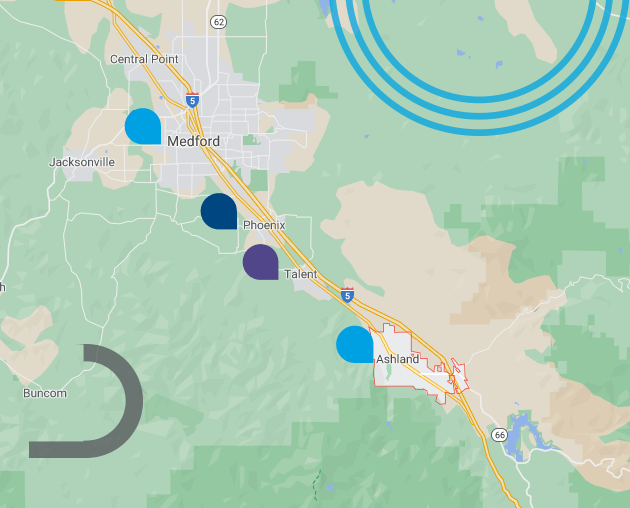
Upon arrival, Stan was told to stay on standby because he was needed at a community hospital in Ashland, where the wildfires were known to have started. They were waiting for a police escort to open barricades and somewhere for Stan’s wife, Lynn, to go.
As luck would have it, Lynn’s former middle school teacher had moved to Southern Oregon from Chicago a few years prior. The teacher, now an angel in disguise, offered them a place to stay.
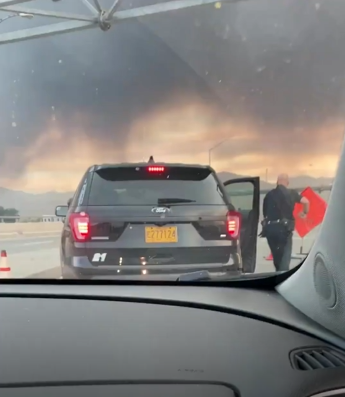
Knowing his wife was safe, Stan and another Triage travel nurse, Kathy, made the unforgettable trip to lend a hand to the small town victims. As police escorts were racing ahead of them to open barricades, Stan looked around at the highway ablaze. It was like a scene from a movie.
At that point, shh…. stuff got real, REAL quick.
Disclaimer: this is not a typical situation, obviously. It’s one we’re in awe of, which is why we took the time to talk with Stan about his and Kathy’s wild, crazy ride through the Oregon wildfires of 2020.
Stan describes what he saw:
Literally, there was a fire on both sides of the road we were driving through. I thought, ‘I can’t believe it; this is serious.’ All I can see is smoke and red blazing everywhere. Signs on the highways were burning; trees were burning, cars are exploding on the sides of the road—a bunch of cars. We were driving through it, and we were really close…I was scared.
Stan also knew that Ashland, being such a rural town, didn’t have multiple fire departments like where he lived in Chicago. It also had a heck of a lot more trees than Chicago.
“Everything was blazing in front of my eyes, the trees are burning, and I’m thinking, ‘I don’t even know where we could run to, the fire was too far,” he said.
Walking into the hospital, shoving aside his fear, Stan went into nurse-mode—consoling his patients who were terrified and distraught after losing everything they had.
With cell towers on fire, internet was spotty at best. Phones were down; people couldn’t communicate to their family they were safe (including Lynn, trying to reach Stan without luck). The hospital’s Epic system was down, so they had to chart the old-school way—paper and pen. When you’re dealing with heavy medication and a highly stressful situation where the possibility for mistakes is already greater…that’s an issue. But he and the staff kept their cool, knowing they had to be there for their patients to deliver the best care possible.
“You know, like 90% of the city of Ashland was destroyed,” he said. “So, I told them, ‘hey, you’re not alone over here. Other employees’ houses and businesses have burned down from the wildfire, so you are not alone. There will be a solution once everything finishes.”
Even though a literal dark cloud of the wildfire hung over them, every person there rallied around each other as members of the same community, facing the same horrific event.
“We all worked together in that hospital,” Stan said. And that’s exactly how they all made it to the other side of this ordeal safe.
No Regrets, Only Gratitude:
When asked if he wishes he had a crystal ball and could see a glimpse into the future before taking this assignment, he answered:
No, I’m glad I experienced this. It was scary, but I’m glad I went through this because I know how to react in these situations now. If a patient is hysterical, I know how to react and stay calm and get them to focus on the bigger picture of life. I can keep others calm, so I need to use the resources I have to help others during the situation.
Stan felt he was up to the challenge of his first travel nurse assignment being in the middle of a pandemic, and boy, did he deliver. The recruiters who told him he couldn’t hang—well, how do you like him now?
To say we’re thankful that both Stan and Kathy were safe throughout the wildfire is an understatement, and we’re beyond grateful to them for taking on this unexpected literal firestorm of an assignment. Situations like this wildfire are exactly why travel nurses and medical pros are needed, though. Smaller, rural communities across the US need help from professionals like these two. It’s why we do what we do.
What did he learn from the entire experience other than he’s pretty much a badass, and his superpower keeps people calm in insanely intense situations?
“I learned that America is a great country and we have a lot of resources here,” he said. “The government did stand up and make sure their people are safe and I knew the hospital would be the safest space to be. I’m very thankful for life and glad to be alive.”
The major takeaway from Stan’s travel nurse story?
“Be grateful for every day. I tell my patients that now, too,” he said. You heard him—nurse’s orders.
And this is why we refer to our medical professionals as heroes—because they are.
Finished the travel nursing guide and are ready to look for an assignment?
Discover new travel nurse jobs, subscribe to customized job alerts and unlock unlimited resources for FREE.
“Since just recently joining The Gypsy Nurse, I have had so many questions answered about the world of travel nursing. This has been an excellent resource!”
When you are looking for housing as a travel nurse, a lot of the time, your search for places that are fully furnished will overlap with vacationers looking for a furnished place to rent during their time away. With the number of people being vaccinated for Covid 19 is on the rise, there is a good chance people will be spending even more time this summer traveling to touristy areas.
Luckily, if you use a site like Furnished Finder, you can hopefully avoid some of this overlap. However, some landlords will still rent across more than one platform, meaning the cost of living could still go up during a busy season in certain areas. Here are a few ways to plan ahead for this scenario and still be able to find affordable travel nurse housing.
Tips for finding affordable travel nurse housing:
Do Your Research
The worst thing you can do is sign a contract with what you believe is a decent rate and then get blindsided by “high season” rental rates. In the winter, northern states or areas with lots of skiing availability may see a spike in rental prices. During the summer or around Spring Break, warmer areas will see a rise in the cost of living. If you aren’t sure if there is a seasonal swing in the area where you will be living, reach out on a housing Facebook group.
Contact Landlords Directly
Another huge advantage to renting from a site like Furnished Finder is you can make direct contact with landlords. Rather than just having to take rental prices at face value, you may be able to find better rates if you can explain that you will be renting for longer than someone on vacation. Guaranteed income can sometimes win out over higher rates from tourists in a landlord’s mind.
Some hospitals might be aware that during a busy tourist season, their normal rates will not suffice for short-term housing. If you really want to get to a certain location but are afraid you won’t be able to afford travel nurse housing, try to wait it out until you see a really great rate for that area. You never know what might pop up, so just be ready to jump on the contract if it is in an area you really want to get to.
Consider a Roommate
If you are single and travel solo, this is usually a fairly easy way to save some money on travel nurse housing. You can look for travel nurse roommates on any of the big travel nurse Facebook groups or even reach out to your recruiter to see if they have anyone else living in the area. Chances are, other travel nurses also want to avoid paying vacation prices for their short-term rental, so they may be eager to split rent with another traveler.
If you’ve done your research, watched contract prices for a while, and still cannot find what you would define as acceptable prices for housing, you may have to realize that this particular location won’t have the whole package available–ever. Some locations are notorious for being low-paying with a higher cost of living. Hawaii is a good example of this. Most veteran travelers will tell you that if you really want to experience these particular locations, your best bet is to go in expecting to pocket very little extra money and perhaps have money set aside for all of the fun expenses that come along with these more expensive spots.
The biggest thing you need to take away is that prices for short-term housing will naturally fluctuate in areas where there are seasonal activities or desirable seasonal weather. There are still travel nurses who take assignments in these areas year-round, so obviously, it is doable! You just have to decide what the best choice is for you and your financial situation and make the best housing choices you can.
We hope you found these tips for finding affordable travel nurse housing helpful. Have you found any other ways to find affordable travel nurse housing? Comment them below if you would like to share your tips for finding affordable travel nurse housing.
If you are a travel nurse looking for housing for your next assignment, check out our Housing Page!
Discover new travel nurse jobs, subscribe to customized job alerts and unlock unlimited resources for FREE.
“Since just recently joining The Gypsy Nurse, I have had so many questions answered about the world of travel nursing. This has been an excellent resource!”
We have seen more and more partners, friends, and even mothers and daughters or siblings choose to find travel contracts together. It makes sense, right? We all know how difficult long-distance relationships can be. Whether one or both of you work in travel nursing, having a loved one along to share your adventure can make all the difference.
We’ve got eight relationship survival tips for when healthcare professionals take travel contracts together.
Proactively discuss your expectations for upcoming contracts with one another. Be clear about details such as hours and shifts worked, your housing arrangements, and even your sightseeing priorities for days off.
It may be more challenging to find contracts for two, but the payoff can be substantial when dealing with facilities that have multiple positions to fill. Good communication is important to a healthy relationship with your recruiter, as it is to your travel buddy. Being open and upfront about your travel goals and needs will help us exceed your expectations.
It might be tempting to spend every moment outside of work together. Your relationship will thank you for occasional breaks. Go out with friends from work, start a conversation with someone at the dog park, or chat with a fellow gym-goer. You can also meet people through Meetup or Facebook groups or ask your recruiter if any other travelers work in the area.
We all react differently to situations, and while one of you may love your latest job, the other may be struggling. Create time and space to listen to one another. You can help each other problem-solve and troubleshoot. If you both make impulsive decisions, do a quick check-in with each other before diving into your next contract. It keeps you both on the same page and lowers the chance of any misunderstanding. You represent a team, tackling life on the road together. Your relationship will only grow stronger from these shared experiences, even when bumps appear on the road.
Travelers are planners, and while it’s tempting to focus on the horizon—the next shift, assignment, or time off from work—don’t forget to slow down and fully enjoy each other’s presence. Sometimes, the small things make our days that much fuller. Consciously be grateful for the opportunities and experiences shared on the road.
If you have not successfully worked together in the same setting with your significant other, bestie, or family member before, you might want to think twice before taking that on. It can sometimes take longer to find contracts that work for couples at the same facility, and that’s a lot of together time, even for just 13 weeks. A good compromise could be to ask for jobs in or near the same city but at different facilities.
Nothing can sabotage a close relationship faster than disagreements about that hard-earned tax-free money. Our advice is to talk about all financial details before your contract. You might want to decide on a travel assignment budget for both of you. Some important details to clarify ahead of time include:
All the expenses you’ll split.
The money you plan to spend together.
The money you plan to spend on your own.
A set amount for incidentals or unexpected expenses.
How much you each hope to save after each assignment.
It may be awkward to talk about money details at first, but you’ll be glad you did.
Keep an open mind and be willing to try new experiences and destinations—plan for the unexpected. As the proverb says, there remains nothing certain but the uncertain. This holds for all of life, but especially when you work as a traveling couple. You’ll need to be extra flexible to keep those coinciding contracts going.
We prioritize relationships at Cariant Health Partners and know how important close connections are for happiness and success. We love working with travel couples—whether significant others, friends, or family members. Connect with one of our recruiters today to learn more about how we can help you travel together with your loved one.
If you are a new travel nurse or looking into becoming a travel nurse:
Discover new travel nurse jobs, subscribe to customized job alerts and unlock unlimited resources for FREE.
“Since just recently joining The Gypsy Nurse, I have had so many questions answered about the world of travel nursing. This has been an excellent resource!”
As a night shift nurse who worked in Pennsylvania for 3 years, I rarely saw the sun. Between sleeping during the day to stay awake all night at work and being winter for roughly 8 months out of the year, I’m sure my vitamin D levels were about zero. This was one of the reasons that sparked my move to California and begin travel nursing.
I wanted to spend more time with the sun. The other motivation for my journey across the country to the Golden State is that California has always been my one true love. Even before I ever set foot on the west coast, I knew I wanted to live here. Between the Hollywood movie magic and the variety of unique nature from the Joshua Trees to the redwoods, I knew I had been born in the wrong state. So after years of California dreamin’, I finally made a move, and my love for this state only grew.
So much litter
The only thing that I really found below my very high expectations was that there is so much litter. Now I’m not saying that other states don’t have a litter, too- they do. But California is my soul state, and it made me so sad to see all the plastic bottles and fast-food wrappers scattered everywhere. Throughout the streets and even on hikes through the mountains, miles away from the nearest town. I was finally able to soak up some sun in the middle of January (unheard of in Pennsylvania). But on my strolls around town, instead of enjoying the warm breeze blowing through the palm trees, I was stepping over empty Starbucks cups and used napkins. It infuriated me to think that people were trashing such a beautiful state. Instead of ignoring the problem or waiting for the city to do something about it, I decided to start doing Trash Walks.
Trash Walks
Trash Walk is a pretty self-explanatory name that I’m sure I’m not the first person to use. But to elaborate anyway, I go on walks throughout the city with a few garbage bags and a trash grabber tool and pick up any litter I may come across. I was already going on the walks, and honestly, I felt awkward before not knowing what to do with my hands as I just roamed around my new town (do I wave at people? Am I swinging my arms the right amount? Good old anxiety).
So after my first trash walk, I posted a picture of myself and all the litter I had collected on my Instagram. In the hopes of inspiring more people to do the same. I have set a goal to collect 50 garbage bags full of the trash before my contract is up in August, and I move on to the next city. The Gypsy Nurse saw my post and then asked me to write this article. I was ecstatic to do so. If my Instagram post, or this article, can inspire even one other person to not litter, or do a trash walk in their own city, then I’ve succeeded in helping the world, no matter how small that help may be.
Why Trash Walks?
Why do I care about helping the world so much? Well, I’m glad you asked, and it’s not because I’m some tree-hugging hippie. I became a nurse because I wanted to help people. And I wanted to make peoples’ lives better, or even just a little easier for a short while. I know how tough life can be and how refreshing it is when someone is kind to you. Unfortunately, I’m sure many other nurses can relate, but this work line isn’t all smiles and holding hands anymore without going into the gritty details of the previous statement. I’ve been feeling burnt out and unsatisfied with my career choice lately.
Doing these trash walks has helped fill that emptiness I’ve been experiencing with nursing. I feel like I’m helping again, just like I have always wanted to do as a nurse. And thankfully, the earth doesn’t fight back when I try to help it, which is a nice change of pace. Thus far, I’ve collected 7 of my goal of 50 bags of litter from around my community. I’m planning to do this with every new contract I work. And I’m hoping I can inspire some others to do the same.
Feel free to follow my #trashwalk progress on my Instagram @shelbyz3
If you are a new traveler or looking into becoming a Travel Nurse:
Discover new travel nurse jobs, subscribe to customized job alerts and unlock unlimited resources for FREE.
“Since just recently joining The Gypsy Nurse, I have had so many questions answered about the world of travel nursing. This has been an excellent resource!”
COVID-19 has impacted every single person on this planet in all sorts of ways. Nurse staffing agencies are working tirelessly to ensure that their nurses and partners stay safe and help the community. These agencies have molded their companies in favor of clients and the pandemic that is in action. These firms help the clients at hand, but they also provide hospitals with the aid they require. There are many steps towards making the world a better and safer place, and these agencies have been working incredibly hard to ensure that.
The first step
The first step that different travel nurse agencies have taken is moving their offices to work remotely from home. This allows staff and clients to feel as though the company is doing its best to keep those individuals healthy and the community around them. Moving travel nurse agencies online has not been easy, making sure every possible worker has the materials they need to assure their clients are getting the best help possible. The improvements are far from over, working every day to get clients the assistance they need and keep the community safe.
During this pandemic, companies have realized that it is their responsibility to health care workers to provide them with the best possible service. Setting up offices at home remotely, customer service has been more accessible than ever, allowing constant service to those who need it. Travel nurse Agencies are prideful in their ability to constantly be near a computer, ready to help and assist their clients around the clock, whether it is to answer questions or guide them into their new and exciting opportunities at hand.
Ensuring nurses are where they need to be
Staffing agencies have been working to ensure clients are exactly where they would want to be and accommodate their every need and provide hospitals with what they require. During these times, hospitals are overflowing with people in desperate need of hospital aid. Since hospitals are now understaffed, it is the staffing agency’s mission to ensure hospitals are fully equipped with everything they need to help anyone who walks through their doors. Their main goal is to step up and become a key part during these times in which everyone must participate to work towards this goal of lowering the curve. To do so, staffing agencies must provide hospitals with the best possible healthcare professionals to benefit the hospital’s goals of making this care accessible.
These travel nurse agencies are working harder than ever, being there every step of the way for hospitals, nurses, doctors, respiratory therapists, and healthcare workers who are devoting their work towards making a healthier world to live in.
Making sure the best nurses are at hand
Staffing agencies are making sure each of their partners has the best nurses at hand to help fight this pandemic and are there for healthcare heroes consistently. The entire globe is extremely grateful for the thousands of nurses who sacrifice their lives to ensure a safer community during these tough times. These firms have collectively given the utmost respect and gratitude towards their nurses and the dependable work they continue to provide. Now more than ever, firms are putting nurses first, attending to their needs and assistance before anything. It is essential that these healthcare heroes are being appreciated and acknowledged for the work they are achieving and nurse staffing agencies are doing so. These firms are working alongside their partners to aid them with nurses they know will be there and give their all to fight the pandemic.
Providing for their clients
During these difficult times, everyone needs a helping hand, and that is what these staffing agencies are providing for their clients, especially the hard-working nurses. Firms are determined to help clients and nurses and have taken it upon themself to help during this pandemic. It is not only up to these frontline workers to make the planet a better place, but nurse staffing agencies have the same goal: a safe and healthy earth.
If you are a new travel nurse or looking into becoming a travel nurse:
Discover new travel nurse jobs, subscribe to customized job alerts and unlock unlimited resources for FREE.
“Since just recently joining The Gypsy Nurse, I have had so many questions answered about the world of travel nursing. This has been an excellent resource!”
We recently had the opportunity to interview Dr. Safiya George, Dean, and Professor of Florida Atlantic University’s College of Nursing. Dean George shared about her pathway to nursing academia and how we can all encourage equity in healthcare and diversity and inclusion in the workforce.
This Q&A with Dean George further enriches our ongoing partnership with FAU’s Christine E. Lynn College of Nursing. In collaboration with FAU, we co-host an engaging webinar series covering topics like promoting diversity in nursing, overcoming compassion fatigue, using technology in healthcare, and battling COVID on the frontlines. In addition to the webinar series, we’ve also established The Cross Country Healthcare Scholarship Fund, which provides annual scholarships and helps fund educational and research opportunities for students attending the College of Nursing for a minimum of four years.
Healthcare Q&A with Dean Safiya George, PhD
Q: How did you get started in academia?
A: As a young girl, I was interested in teaching the neighborhood kids in my mock classroom in my backyard, and then in college, I thoroughly enjoyed tutoring chemistry. My name means wisdom, so I have always felt the responsibility of doing my best to share my knowledge with others. After completing my Ph.D. at Emory University and Postdoctoral Fellowship at Duke University, I was eager to join the nursing faculty at Emory University. Since then, I also taught at the University of Alabama before joining our beloved Florida Atlantic University.
Q: We heard a rumor that you are one of the youngest deans in the country! Can you confirm? How does this make you feel?
Well, I’m fairly confident that this was true when I assumed the deanship in 2019 at 40 years old. However, by now, there might be other 40-year-olds now beginning their deanships, so I am not sure. I continue to be humbled by this opportunity and the strengths, skills, and talents that I have been blessed with that have enabled me to be very successful throughout my life and career. I started nursing school at age 15, completed my BSN at age 18, and became a registered nurse at age 19, so by now, I am used to being among the youngest in academic and professional settings. It keeps me humble and grateful.
Q: Recently, the conversation within many organizations has been about equity and inclusion, and the things that we’re doing to encourage it. How do you think these conversations could impact the profession, for example, by potentially increasing the number of African Americans and other underrepresented groups within the healthcare profession?
A: I believe that by now, most leaders in the healthcare field/industry recognize that there is a dire need to have a healthcare workforce that resembles the population that we care for. There are many benefits to the patient for doing so, including helping to close the gap in health disparities and inequities in access to healthcare and healthcare delivery. The conversation is one thing, but the results are definitely doing and will only be achieved if funding and investment are also part of the comprehensive effort.
Q: Do hospitals have a role in promoting equity? Do nurses? How can they help promote equity?
A: Yes, hospitals have a role in promoting equitable access to high-quality healthcare for all patients, equity in position opportunities, and compensation and equity in who gets invited to a seat at the table where important decisions are made.
Q: Do you have any thoughts on the lack of diversity in the CNO role? Do you have any perspective on what the industry can do to encourage nurses of color to consider this as a career path? (Source: https://www.advisory.com/en/daily-briefing/2020/06/25/black-cno)
A: I don’t really have a definitive perspective other than the lack of diversity in the CNO role mirrors the lack of diversity in upper administration in most sectors in our country. More scholarships to support educational attainment for nurses of color in nursing, advanced practice nursing, healthcare administration/nursing administration, and mentorship programs to prepare for nursing management and CNO roles would likely be helpful and encouraging.
Q: Any words you would like to share about Black History Month?
A: I appreciate the opportunity to share a few thoughts and perspectives, especially with Cross Country, who is a great partner, supporter of nursing education, and stellar example of an organization helping to address the nursing shortage.
About Dean Safiya George, Ph.D.
Safiya George, Dean of FAU’s College of Nursing, earned her Ph.D. and MSN degrees from Emory University and completed a postdoctoral fellowship at Duke University in religion and health. She is only the third dean to be appointed in the college’s 40-year history. George previously served as a member of the faculty at Emory University’s Nell Hodgson Woodruff School of Nursing until she was recruited in 2015 to the Capstone College of Nursing at the University of Alabama, where she has served as assistant dean for research, director of the Office of Scholarly Affairs, and a member of the advisory board of the Alabama Life Research Institute. She also has served as faculty in the Honors College and faculty-in-residence for residential honors students at the University of Alabama.
If you are a new travel nurse or looking into becoming a travel nurse:
Discover new travel nurse jobs, subscribe to customized job alerts and unlock unlimited resources for FREE.
“Since just recently joining The Gypsy Nurse, I have had so many questions answered about the world of travel nursing. This has been an excellent resource!”
As a traveler mobilizes from assignment to assignment, they will occasionally have mail sent directly to one of the temporary travel nurse mailing addresses instead of having it forwarded from the main mailing address.
While this may be convenient, it is a recipe for trouble on the tax end. In our practice, we have seen the following scenarios that travelers should be aware of.
Retirement distributions are received during assignments.
Most financial institutions are required to designate the state in which any distributed retirement funds are sent. If you withdraw from your retirement funds or do a ROTH conversion, be sure to confirm that the financial institution is reporting the distribution to your home state.
When filing your annual tax return, it is a strong possibility that the 1099R that reports the distribution will be coded for the state of receipt and not your home state. Since most states take the position that the 1099 or W2 is correct unless otherwise documented or corrected, a traveler could be liable for taxes to that state on income they never earned there.
Residency Audits
State revenue audit departments often make the IRS look like a harmless fuzz ball. They will aggressively pursue the smallest shred of evidence that would suggest that a taxpayer is a resident of that state. Many of them have departments called “Discovery Units” or some title that makes them sound like military special forces.
W2s are sent to parents’ addresses during a traveler’s move to another state. The parent’s home state assessed tax on total income for the year based on W2 address.
Utilizing an out-of-state hospital for delivery. A resident of one state with family in another state chose to close out her pregnancy near her family. The state assessed the mother for full-year taxes, asserting that she was a resident since she used the hospital facilities.
The traveler took a travel assignment in a state bordering their grandfather’s home state to care for him during off days during terminal illness. The traveler had their grandparent’s address listed on financial mailings for convenience. Grandfather’s state assessed travelers for taxes as if they were a resident.
Using professional practice licenses as evidence of residency. Almost all states with an income tax now cross reference professional practice licenses and their tax return database. If no tax return is found during a year in which the license is active, letters are randomly generated to the last known address requesting an explanation or a return.
Adjacent year return. Often, filing in a state for one year will trigger an expectation of a return the subsequent year regardless of whether any income was earned.
Incorrect filing. A common mistake of chain tax companies and DIY travelers is claiming part-year residency in every state worked. This becomes a license issue. Compact state licenses require that a resident return be filed in the home state OR, if the home state does not have an income tax, that no other state has a resident filing.
What happened with these cases? Years later, travelers either discovered tax liens during loan applications or received notices that were sent to the wrong address. One locum client of ours had a six-year-old, $56,000 lien filed by the state of California. The traveler discovered the lien when applying for a mortgage.
Discover new travel nurse jobs, subscribe to customized job alerts and unlock unlimited resources for FREE.
“Since just recently joining The Gypsy Nurse, I have had so many questions answered about the world of travel nursing. This has been an excellent resource!”
Happy Nurses Week 2025! We’re so grateful for all that nurses do—every single day. This week is all about you, and we’re excited to celebrate with a giveaway! Need more details? Visit our Facebook page.