By Rebecca Metzler

January 15, 2021

8261 Views

ADVERTISEMENT

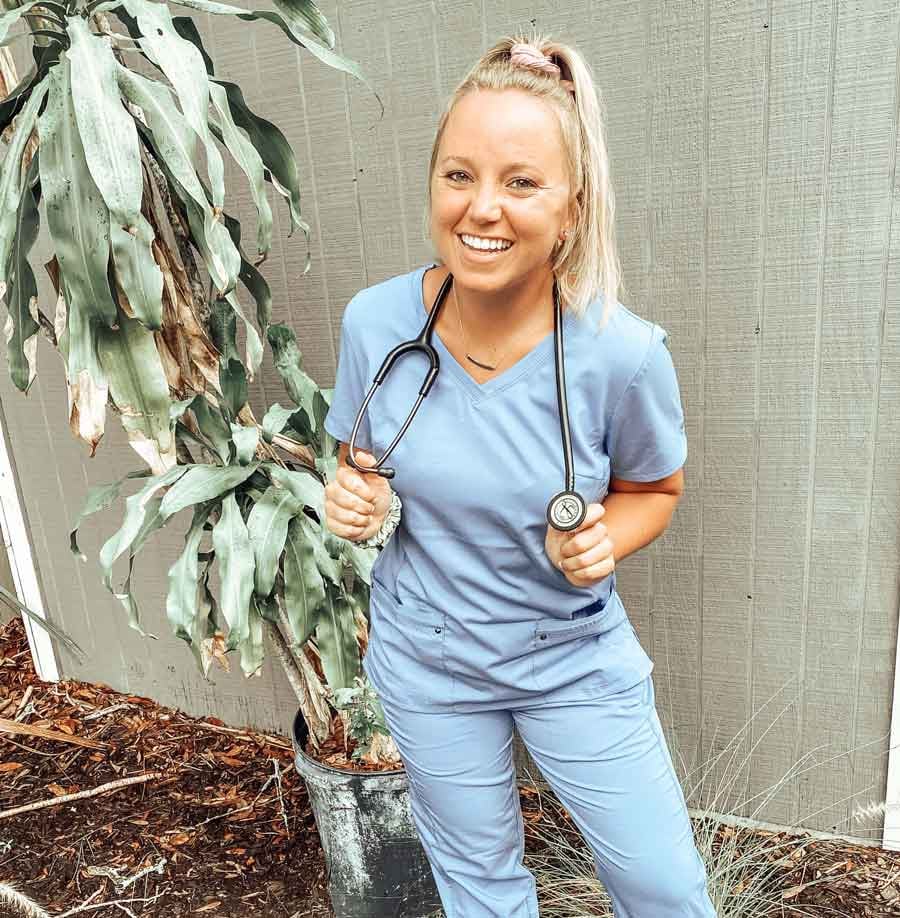
Reservation Travel Nursing In a Pandemic

I walked through the hospital doors feeling a bit nervous. Today was my first day on the job. The roof had large window cut-outs, exposing the blue sky. Statues and paintings of Native Americans were displayed throughout the lobby. Women and men were photographed in native clothes, beautiful thick braids below their waist. The land surrounding the hospital was flat and expansive. I got my badge laminated together and headed to the outpatient department, where I would be working for the next 13 weeks.

COVID-19 and Native Americans

A few months ago, I heard on the news how COVID-19 was devastatingly affecting the Native American communities in Northern Arizona. One of my friends was actually working in the inpatient department at the hospital. She told me what it was like living on the reservation and how the hospital needed more nurses. At the time, I was working as a public health nurse in Austin. I had no idea there were clinic nurse travel positions. I thought traveling was limited to hospital nursing. But after reaching out to a recruiter and filling out a ton of paperwork… there I was!   13 hours from home, in the middle of the Navajo reservation with 2 suitcases and 4 jugs of water.  

Barriers they face

For the next 13 weeks, I spent the weekdays in the outpatient department and doing drive-thru covid testing. I soon learned some of the barriers this community faced in the presence of COVID-19. Multi-generation family living accelerated the spread of the virus in households. The prevalence of chronic illnesses among the population made it harder for locals to fight and recover from COVID-19. As a result, many people lost loved ones.  It was hard on the community and the hospital. So I worked alongside my team, lessening the spread of COVID-19 through education, testing, providing resources for essential supplies, and any other way we could.  

The majority of my coworkers were local and permanent employees.

They would tell stories about growing up on the reservation, showed me videos of the different dances they perform for ceremonies. One day, a coworker pulled a piece of corn out of her bag and handed it to me. “I smoked these over the weekend. Do you want one?” I smiled and took a piece. I really enjoyed the contrast to my typical work. Patients were curious, “You must be new here. Where are you from? How do you like living out here?” they would ask. Everyone knew everyone around town, and I was a new face.

The pandemic kept me from knowing my neighbors well.

A simple wave on the side of the streets as we walk past 6 ft apart. But I found ways to entertain myself. On the weekends, I would slip my Nikes on in the morning and go pet the horses behind my house. I would go on hikes, climb up on the giant boulders overlooking the scenery around. You could see the sandy dirt for miles, shrubs decorating the sides of the canyons. In the evening, I would sip on tea, maybe read an old western. Get a soda from the one gas station nearby, drop off some letters at the post office.

There is a peacefulness that exists out there.

I have always been attracted to that. To live somewhere remote, farther from wifi and the accessibility to the things I claim to “need.” It would annoy me at times, but it was an opportunity to see how other people live.  I had to buy jugs of water to drink because their water source is contaminated with uranium and arsenic. I had to buy groceries in bulk because it took 2 hours to get there. And inevitably, I would forget something, lettuce or dish soap.  

I truly appreciate my time on the Navajo reservation.

I watched sunsets behind the canyon, saw how the pink sky painted the landscape. Saw birds perch on the telephone pole wires, chirping away every evening. Giant ants were crawling on the cemented sidewalks as I walked into work. I learned what the difference between a crow and a raven was. I was welcomed with generosity and learned from the locals. In turn, I was able to contribute my nursing abilities.

I would encourage other nurses to take IHS contracts.

 I want to encourage other nurses to take an IHS or other remote contracts. To work with communities that need assistance, especially during COVID-19. I do not in the slightest believe I am now well-versed in Native American culture. I am only beginning to dive in, but I have an awareness I would not otherwise have. An awareness that will continue to influence how I nurse, maybe even the future jobs I pursue. Working on the Navajo reservation caused me to expand my understanding of cultures (especially in the United States) and the barriers underserved communities face. So take a chance, Go on an adventure to a whole other world. You will grow in ways you never imagined. 

Finished the travel nursing guide and are ready to look for an assignment?

Check out our travel nurse jobs!

By Nancy Howard

January 13, 2021

10536 Views

ADVERTISEMENT

6 Nursing Apps for Travel Nurses and Nursing Students

Modern medical professionals need to stay updated with the latest developments, innovations, and discoveries in this area. There are many specialized sites, dental blogs, medical journals, and even specialized nursing apps. This article will focus on the latter.

However, with such a variety of different nursing apps, travel nurses and students can be misled. Therefore, below you will find the best applications that will help with your professional development and education.

Top 6 Nursing Apps for Travel Nurses and Students

Whether you are a student or already working as a travel nurse, there are some apps to help you get better. Some tools allow you to broaden your knowledge, prepare for exams, while other apps are responsible for workflow planning. Below you will find 6 nursing apps that are a must-have for all travel nurses and medical students.

1.   PEPID PEDS

Pros

  • Available for both IOS, Android, and PC.
  • Allows for a more accurate diagnosis statement.
  • There is a lot of detailed information on patient care.

Cons

  • The only drawback is the cost of the app. There is a trial period here.

It can be safely noted that this application is a must-have for both students, nurses, and doctors. In this app, each specialist can find the information they need to make a more accurate diagnosis or find answers to questions.

For students, there are complete discipline guidance, clinical practice, and even laboratory exercises. The tool is paid, but in fact, the fee is charged for a year, and from this perspective, this application looks more affordable.

2.   Epocrates

Pros

  • Availability of a wide database of information in the field of pharmacology.
  • The availability of a free version of the app is sufficient for students and novice nurses.
  • The application can work offline. It is available for IOS and Android.

Cons

  • While the free version offers many options, a premium membership will be a better option for healthcare practitioners.

In this application, you can find all the information on each drug, interactions between drugs, and in-depth clinical guidelines. There is also a “Pill ID” feature with the help of which the nurse may quickly get all the data about the drug. Thus, nurses can avoid mistakes in patient care, and students can better prepare for exams with this tool.

3.   NCLEX RN Mastery

Pros

  • There is a free version, but with in-app purchases.
  • Available on both iOS and Android.
  • This app is a good trainer to prepare for an exam.

Cons

  • There are no obvious disadvantages.

This app is a good option for those who want to prepare well for the NCLEX RN exam. There are hundreds of tests in this app to check the knowledge. You can not only test your knowledge but also fill in the gaps that can become an obstacle to successfully passing the exam. If you do not answer the test correctly, you will receive a detailed explanation of this issue, and thus, avoid the mistake next time.

4.   WebMD

Pros

  • There are a lot of helpful resources for students and nurses.
  • The application is available for free for both Android and iOS.

Cons

  • In most cases of diagnosis checks, this application will suggest “cancer”. This feature can confuse students and nurses.

This is an app of the famous resource of the same name. All publications and resources of the official site are available in this application. Here, both students and nurses can find useful information regarding medical practice, pharmacology, and other topics in the field of health. It is also known for allowing patients to receive information in simple words rather than complex medical terminology.

5.   NurseGrid

Pros

Cons

  • Customer support can take a long time to respond.

It is a good tool for nurses and students to plan work schedules and communicate. Here you can create a schedule for the entire work shift to be aware of who is at work. This app provides internal communication between nurses. It is a good time and task management tool for medical professionals.

6.   Med Mnemonics

Pros

  • A good knowledge base for both students and healthcare practitioners.
  • There are tips on how to memorize information faster.
  • Users note the real benefits of using the application.

Cons

  • The tool is paid ($2). However, this symbolic sum is difficult to consider as a crucial drawback.

This app is designed to help experts and students quickly memorize complex medical terminology. There are a variety of tips and about 1600 abbreviations to help you quickly understand diagnoses or terms. There are all sections of topics that are useful for both travel nurses and students. This educational tool will be useful for all users.

Conclusion

Choose the best apps that will help you both in education and at work. A busy schedule sometimes does not allow you to develop and study further, but apps allow you to do this at any free minute. Download any of the tools above and start improving your knowledge and skills right now.

By Medical Staffing Solutions, LLC

January 12, 2021

7070 Views

ADVERTISEMENT

Healthy Snacks on the Go for Travel Nurses

This article was provided by Medical Staffing Solution LLC.

As a healthcare professional, it can be hard to eat healthy when running and to work long shifts. But, taking care of yourself is so important when you’re taking care of others. You don’t want to get run-down. To help you snack well and keep your energy up, we wanted to share these 10 energy-boosting healthy snacks with you.

Chickpeas

Chickpeas are packed full of protein, fiber, and potassium. In addition to filling you up, they can help control diabetes and blood pressure. Along with all the other nutrients, the iron and calcium in chickpeas contribute to bone health. Roasted chickpeas are an easy way to get your snack fix.

Trail Mix

This delightfully tasty mix of dried fruits, nuts, chocolate, and grains. Buy pre-packaged or create your own that is tailored to your tastes. The protein in the fruits and nuts will help fill you up and give you an energy boost, while the chocolate can help satisfy your sweet tooth. Add in some roasted chickpeas. It is important to remember to eat your trail mix in moderation. Trail mixes are high in calories. Remember, too much of anything is not a good thing.

Jerky

Made from beef, chicken, or turkey, jerky is a quick portable snack that’s loaded with protein. Just make sure if you are buying jerky that you check for added sugars or salt.

Greek Yogurt

A single-serving of Greek yogurt packs a lot of protein into a small container. Add in berries packed with lots of nutrients and fiber to help fill you up and aid in your digestion. The calcium in yogurt is another boost for your bone health.

Pumpkin Seeds

No access to the fridge? No problem. Keep a little packet of pumpkin seeds for a quick snack. Just a ⅔ cup can give you 8 grams of protein. They are also loaded with fiber, vitamin k, phosphorus, manganese, magnesium, iron, zinc, copper, and many antioxidants. Studies have shown that diets rich in pumpkin seeds have been associated with reducing the risk of certain cancers, improving prostate, bladder, and heart health, and lowering blood sugar levels. And this amazing snack does not require refrigeration.

Peanut Butter and Apples

Apples contain a whole slew of vitamins (A, B1, B2, B6, C, K, copper, manganese, and potassium), are high in fiber, and are just good for your health in general. Peanut butter is protein-rich, high in healthy fats, and chocked full of vitamins and minerals. A quick apple and peanut butter snack will help fill you up and give you an energy boost to get you through your shift.

Almonds

Almonds, too, are loaded with nutrients even in just a small handful. They are high in protein and fiber and low in carbs, making them a great option if you have diabetes. Packed with magnesium – almost half your daily requirements in just one serving, almonds can assist with blood sugar control and benefits blood pressure levels. Plus, they fill you up.

Cheesy Popcorn

Popcorn alone is a yummy, easy healthy snack that will help fill you up. But, give yourself an energy boost by adding on some parmesan cheese for protein.

String Cheese

It’s hard to believe that nutritionists will approve processed food, but string cheese actually makes their list. String cheese provides your carbs and protein for energy and calcium for strong bones. Add veggie sticks or fruit to your snack for an extra boost.

Veggie Sticks

No list of healthy snacks would be complete without veggie sticks. Pack yourself a handful of carrot and celery sticks. Snack on them with peanut butter or yogurt for a protein boost. These veggies are loaded with antioxidants, potassium, and numerous other vitamins and minerals.

High-protein healthy snacks are valuable to you as a strike nurse to ensure you can stay full until mealtime and avoid any “hanger” issues that can arise while you’re working. Keeping a small selection on-hand will make it easier for you to grab a quick bite, even when time is short.

 APPLY FOR TRAVEL NURSING JOBS TODAY TO GET STARTED ON YOUR TRAVEL ADVENTURE!

If you are a new travel nurse or looking into becoming a travel nurse:

Travel Nurse Guide: Step-by-Step (now offered in a PDF Downloadable version!)

By Furnished Finder

January 11, 2021

48798 Views

ADVERTISEMENT

How to Market Your Rental to Travel Nurses

Whether you are a travel nurse yourself and looking to offset some of the costs of maintaining a tax home or a landlord trying to reach travel nurses in need of short-term housing, it can be hard to know how to reach your ideal client.

Even if you are a part of the travel nurse community, finding someone who is going to be in the right place at the right time is difficult enough. Then to find a new tenant when that first one leaves–it can get to be very frustrating.

At Furnished Finder, we specialize in matching landlords who prefer short-term tenants with travel nurses who are in need of what they have to offer. Here are a few ways we suggest marketing your short-term rental to travel nurses:

Rental

List your place on a platform like Furnished Finder. 

The advantage of listing your property on a site specializing in short-term rentals is you will have people coming directly to you asking to rent your space. You invest a little bit of time and money upfront and, ideally, will not have to do much work once you get a renter or two in and receive good reviews.

Try Travel Nurse Housing Facebook groups.

Facebook groups are a little more hit or miss. But they can get your rental out fairly quickly in front of thousands of people. Our two favorite Facebook groups are the Gypsy Nurse Housing Group and the Furnished Finder Housing Group. Here, you can post what you have available and hope to connect with a traveler in need. The main downside is that you will need to re-post regularly if you need to fill the vacancy. Older posts will become less visible per the Facebook algorithm. 

Reach out to your recruiter.

If you are a travel nurse yourself, let your recruiter(s) know that you are opening up a rental space for other travelers. Give them the basics about your rental. Including the price. Invite them to share it with travelers or other recruiters who might be able to spread the word even more. Recruiters have a lot of connections in the industry, so they might be able to find a match for you.

rental

Consider putting up a notice at a local hospital.

If you have connections with a unit or manager at home, ask if you could be allowed to post a paper notice about your space. This could attract some last-minute travel nurses who are still looking for housing. Also, the manager may be able to recommend housing in interviews, which could draw in potential renters.

Make sure your renters are leaving reviews.

As a travel nurse landlord, you need good references just as much as a tenant does. Be sure to ask all of your current or previous tenants if they would be willing to give you a good recommendation to future tenants. This could be as simple as potential tenants sending them a quick email. If you are listed on a professional platform, don’t be afraid to gently remind them to leave a review when they move out.

The travel nurse housing market can be a lucrative place to earn passive income. But it may be a little intimidating to get started. By knowing how to market your rental effectively, you can feel more confident that you will be successful in this venture. For more tips on becoming a travel nurse landlord, be sure to check out this E-Book

If you are a new travel nurse or looking into becoming a travel nurse:

Travel Nurse Guide: Step-by-Step (now offered in a PDF Downloadable version!)

By Carol Duke

January 5, 2021

8148 Views

ADVERTISEMENT

How to Make Your Travel Nursing Application Stand Out

“You only get one chance to make a first impression.” It’s an old adage that couldn’t be more true for travel nursing applicants looking to win their dream job.

A job application is a crucial introduction between you and a hiring manager or potential employer. A well-organized resume gives your future boss a quick glimpse into a lifetime of experiences and accomplishments, helping them decide whether or not you’d get that call for an interview.

Whether you’re a fresh graduate, a newly registered nurse, or one who’s been working in the field for many years, it’s important to keep your nursing application well-polished and up-to-date.

So how do you make an impression as the best candidate for a travel nursing job? Below are some tips and advice to help you stand out from the competition and get that job you’re seeking:

Earn a degree.

To stand out from the crowd, a nurse should consider earning a Master of Science in Nursing (MSN) degree. While a bachelor’s degree is enough for nurses to gain knowledge and demonstrate their dedication to the field of healthcare, the rapidly growing number of professional nurses with a bachelor’s degree has become the norm.

An MSN degree on your resume or CV can help boost your chances of getting the job. A nurse with an MSN degree has the advanced knowledge, training, and expertise required to not only provide high-quality patient care but also to lead and guide their colleagues.

Spice up your resume and cover letter.

Even before entering the professional world, fresh graduates should highlight their school activities, volunteer work, special projects, and other notable involvement in student nursing organizations.

If you’re new in the field, you can also talk about previous job experiences, even if it’s not in the health care setting. If you’re a newly registered nurse, you should also offer examples of your great work ethic.

Meanwhile, seasoned nurses should write in detail about their job experiences, skills, and ability to contribute to and work with a team. They can also focus on their enthusiasm, eagerness, and dedication to staying up-to-date with the latest technology and theories in nursing, as well as their readiness to embrace change.

Of course, make it a habit to proofread, edit, and double-check errors on your resume or cover letter before submitting it to a potential employer. Make sure there are no mistakes in your grammar, spelling, and punctuation. Additionally, use fonts that are readable and easy on the eyes, such as Arial.

Not sure how to get started with your resume? Don’t fret. You can find writing help online, straight from experts and professionals. Whether you need nursing essay writing services or writing and editing assistance for your nursing application, you can always turn to a seasoned writer or editor to help polish up your papers. It’s easy, it’s convenient, and it’s affordable, too.

Put the spotlight on your clinical experience and areas of expertise.

Simply stating that you’re a registered nurse who has earned a degree won’t grab the attention of potential employers and earn you a slot for an interview. Instead, take some time to list down your areas of expertise. This way, you’ll give your future boss an idea of the specific skills you’re adept in.

While skills are usually described in detail during the interview process, highlighting them in your job application could be your key to earning that face-to-face meeting with a potential employer. For nurses, consider including a section, preferably near the top of your resume, where hiring managers can easily find your skill sets and expertise. This could be anything from intravenous (IV) infusion certification, emergency/critical care experience, management and administration, nursing informatics, and more.  

Stress the importance of workplace values.

Describing your workplace responsibilities won’t be enough to impress an employer or hiring manager, especially in the health care setting. They will want to know how you, as a professional nurse, had a direct contribution to improving the overall quality of patient care, care delivery processes and reduced the cost of care in your previous job experience.

When presenting your travel nursing application, make sure you’ve included specific descriptions of your workplace values and accomplishments. Sure, showcasing your honors, awards, and certificates can be helpful, but they’re not the only way to express value.

As a nurse, you should look for chances to measure your job accomplishments in a tangible way, one that can be conveyed in your resume. Consider adding quantifiable information, like the number of employees or trainees you’ve supervised or the increase in your department’s productivity rate at the time you were working for them. Even small details like the average number of patients you can handle each day can provide a clearer picture of your nurse’s achievements.

For professional nurses, a job application is a great opportunity to put your best foot forward, both in your present and potential workplaces.

Remember: It’s important not to make your resume stand out for the wrong reasons. Follow the simple tips above while filling out your travel nursing application, and you’ll be one step closer to your dream travel nursing job!

If you are a new travel nurse or looking into becoming a travel nurse:

Travel Nurse Guide: Step-by-Step (now offered in a PDF Downloadable version!)

By White Glove Placement

December 31, 2020

7173 Views

ADVERTISEMENT

The Best Places to Travel for Each Month of the Year

This article was provided by White Glove Placement.

After contending with the coronavirus for almost a year, travel nurses both need—and deserve—some R&R. Although international travel may not be safe yet, there are plenty of destinations within the United States that would make a perfect getaway. Treat yourself to beautiful vistas, spectacular weather, and sensational events.

January

In the month of January, escape the freezing temps by visiting idyllic Jekyll Island, Georgia, for a coastal getaway. The high temperature in January is in the low-60s, which means fairly uninterrupted beach time without the usual summer. As an added bonus, the island hosts an event called Island Treasures, which is a sort of hide-and-seek game where locals and visitors search for hidden glass globes similar to those fishermen once used to mark their nets.

February

Art lovers can rejoice in a vacation to Seattle, Washington, in February during the city’s Museum Month. Over 40 museums and cultural institutions participate in the event where admission is half-price. Visit exhibits like MoPop, the Seattle Aquarium, or the Seattle Art Museum, which have surely been on your bucket list for years.

March

If you’re looking for a quaint and cozy vacation during the month of March, then visit Newfield, Maine, during the maple season. Check out the famous sugarhouses and walk-through tiny cabins scattered in the woods as the scent of sugar wafts in the air. Try visiting on Maine Maple Sunday for free tastings.

April

Although the annual Jazz and Heritage Festival in New Orleans, Louisiana, was canceled this year due to the pandemic, it plans to reopen in April 2021. The event includes live music from both local and nationally known artists. Enjoy local foods like crawfish beignets and alligator sausage po’boys to get an authentic taste of the bayou.

May

Looking to vacation somewhere a little more mainstream? Consider Louisville, Kentucky, in May for the annual Kentucky Derby. While the weather can sometimes be finicky, the event is a great excuse to put on your most elaborate hat and sip a mint julep while watching the horse races. Tickets are reasonably priced and give you access to vendors to buy cigars, drinks, foods, and to place a wager on your favorite horses.

June

In June, travel to Temecula Valley, California, to experience the Balloon and Wine Festival. Start your day with a sunrise hot air balloon launch, and then enjoy wine tastings, craft fair art exhibits, or wine barrel racing. The warm weather is inviting but not overbearing, making it the perfect time to sit outside while sipping on wine or local craft beer.

July

A hidden gem to visit during the month of July is Mackinac Island, Michigan. The relatively small island can only be reached by ferry, and upon arrival, you’ll find that there are no cars or chain hotels. It is the perfect destination for quality time outdoors if you want to hike, horseback ride, or relax on the beach by the Great Lakes.

August

Visit the nation’s largest state fair in Minneapolis, Minnesota, during the month of August. Go on your favorite carnival rides or indulge in an assortment of foods served on sticks (like pickles or macaroni). It’s a fun time for kids of all ages.

September

Visiting San Francisco, California, in September is a great option because the city experiences one of its warmest and driest months. Take a stroll—without a large number of tourists—on the Golden Gate Bridge or go on a whale watching tour to see the migrating blue and humpback whales.

October

For something a little spookier, visit Salem, Massachusetts, in October for the annual Haunted Happenings Festival. There are parades, costume balls, ghost tours, haunted houses, and movie nights, all at the very location of the original Salem Witch Trials. If you are a bit of a history buff, make sure to check out the Salem Witch Museum or the Salem Witch Trials Memorial to learn more about the infamous witch trials.

November

If you want to escape the cold, November is a great month to visit Key West, Florida. Temperatures are in the high 70’s and low 80’s. There are plenty of aquatic activities to take part in besides enjoying the beach—you can rent a kayak, snorkel, or rent a boat and sail around the open waters. At the end of the day, enjoy a drink at Sloppy Joe’s, one of Ernest Hemingway’s favorite spots.

December

Enjoy the snow and ski season with a trip to Sun Valley, Idaho, in December. With picturesque and pristine mountains for skiing, snowboarding, snowshoeing, or snowmobiling, Sun Valley is an ideal winter getaway. And when it is time to warm up, the area boasts incredible naturally occurring hot springs. Rent a cozy cabin and snuggle up by the fireplace after a long day embracing the outdoors.

Fun in New York all year

If you are a thrill seeker and are looking for adventure and excitement, New York is a great assignment location any time of the year!  There is so much to do and see in New York that it makes a great location for an assignment.  If you are looking for excitement, there are many options.  New York City is full of exciting things to do.  You could try indoor skydiving at iFLY Westchester, go on a ghost hunt at the Ghostbuster’s firehouse, take in a game at one of the many sports stadiums in the city.  You can also enjoy the hustle and bustle of Time Square.  If relaxing is more your style you could spend some time in Central Park.  If you are looking for more outdoor adventures, while in NYC, you can watch & listen to the New York Philharmonic Orchestra, admire street art in Bushwick, and of course, you could always take in a show on Broadway.  New York really is a great place to consider for your next assignment for any adventure.

By Triage Healthcare Staffing

December 29, 2020

8371 Views

ADVERTISEMENT

When Travel Nursing Plans Meet a Pandemic

This article was provided by Triage.

Kahla: Travel Nursing Plans During a Pandemic

Be honest. You’ve considered traveling as a medical professional, but the thought of leaving the comfort of your home, a steady job, family, and friends, gives you the sweats a little. It’s fine, we understand. But how do you feel about regret? 

Take it from this young lady, Kahla (pronounced Kay-lah), a registered nurse who “leaped” as a first-time traveler in the middle of a pandemic: “I just have always known that it was something that I wanted to do and I knew that if I didn’t go for it, I would look back later in life and regret it,” she said.

IMG_6208

On How She Got Here:

Kahla is one of those rare breeds of humans who knew what she wanted to be when she grew up straight out of high school. Anatomy and physiology classes had her dreaming about scrubs and stethoscopes, so she knew she wanted to be in the medical field.

Deciding what program to take, Kahla considered what she wanted in patient care. “Did I want just to go around and talk to people for five minutes and then not see them again for a couple of days,” she thought, “or do I want to work 12-hour shifts with the same people and actually get to know them and interact with them?” From there, she chose the ladder and began working toward a career in nursing.

While researching the medical field and deciding which nursing route to take (always researching with this girl), Kahla came across a travel nurse job listing. “I might have even been looking at ‘highest paying nursing jobs,’ and travel nursing was on that list,” she said. Pff, ain’t no shame in that game!

Generally, hospitals and medical facilities require a traveler to have two or more years of experience under their belt. Why? For many reasons, but one of which being, they need you to hit the ground running basically day one. You’re only there for three months, and they can’t afford one of those months to be spent on training.

Due to the pandemic, however, several healthcare systems around the country eased their requirements, so travel medical pros who had less than two years of hospital experience could assist.

You can see where “lucky” would be an odd way to describe Kahla having the opportunity to travel before most, but it gave her a jump-start she’s admittedly thankful for.

“Honestly, I was getting burnt out with my first job, and I was just kind of tired of some of the things that were going on there,” she said. “So I just was like, ‘You know what? Screw it. Why not now?’” After that, she took her first contract assignment.

travel nursing plans

On Connecting with a Recruiter:

Even “newbies” in the medical travel world know that options probably won’t be a problem once you put your feelers out there. Usually, getting your phone to stop ringing is the issue.

Jill, a social media recruiter at Triage, contacted Kahla via Messenger. After texting back and forth for a while, they hopped on a call that Kahla describes:

She was just super personable, social, and cared about me more than getting me to travel. I’ve had many phone calls with different recruiters where they answer [the phone], and they’re like, ‘okay, where do you want to go, and what’s your specialty?’ They didn’t ask any life questions. With Jill (and Robyn), I felt as if I was talking to my friends. I need that personal connection—to know that they have my best interest in mind and aren’t just trying to give me a job to get money.

On Choosing an Assignment:

Every travel nurse has their reason for experiencing the travel life—most have a few. It’s really about prioritizing your reasons and choosing assignments based on that hierarchy. For Kahla, her priority when it comes to picking an assignment is location, location, location.

“I feel like a lot of people right now will just go wherever the highest-paying job is, but I try to find a hospital in an area that I want to visit, usually because I have friends or family there,” she said. “But, when it comes to specific contracts, definitely the specialty!”

During her search for an assignment in Florida, she was sent positions for specialties she had no experience with, such as neuro.

“I’m like, ‘me and neuro? Ha!” she laughed. “I’m just not a neuro person—so, specialty is a big one for me and so is a shift.”

We’re telling you, we’ve found a unicorn with this one. Kahla prefers…wait for it…the night shift! In fact, she loves it. Yes, we know (and so does she), at almost 24, she’s probably better equipped to handle the “nightlife.” But, it’s not just that, she claims. Aside from it working better with her lifestyle, she also likes “the flow of work a lot better.”

“We definitely still have busy nights,” she explains, “but it’s nice to actually get time to sit down and talk to your patients if they’re still awake, or just sit down and talk to your coworkers instead of running around with a million people around you.”

So young, yet so wise, Kahla shares a couple of interview tips she has used, or plans on using:

“Right now, it’s self-explanatory why they need travelers during the pandemic with COVID,” she said. “But, when it dies down, I’ll start asking—trying to figure out what I’m getting myself into.” 

On the Travel Life:

It’s been a long-standing rumor (and we say rumor because we aren’t there to bear witness) about perm staff treating travelers with, perhaps, a bit of jealous disdain. Thankfully, Kahla says, “for the most part, everyone’s pretty welcoming and helpful” and here to shed some light on the topic:

I’ve heard that’s one thing that holds many people back from travel nursing because they’re afraid of getting the worst assignment on the floor with the worst patients. But, for the most part, that really hasn’t happened to me. If it does happen to me, I’m a one-day-at-a-time type of person. I think, ‘tomorrow’s a new day; I can do this for 12 hours.’ I don’t really let it get to me. I’m not going to let that hold me back from continuing to travel and live the life I want to live.

Many-a-traveler has told us their favorite aspect of contract assignments can stay out of “workplace politics.” Bad attitudes? Take it with a grain of salt. It’s their problem, not yours. Boo-yah! 

“It’s nice just not to have to be attached to something; you can just do your job and get out,” she said.

travel nursing plans

Kahla works hard to live the life she’s always dreamed of, including taking care of herself mentally and physically. This go-getter is also a part-time fitness coach (holy tenacity, Batman). 

“If I didn’t work out and live the healthy lifestyle that I do, I think I would lose my mind,” she said. “Especially with nursing—I’m a firm believer that we have to take care of ourselves before we can do anything else and take care of others.”

We 100% agree.

The best part about the #TravelNurseLife? “One is obviously traveling,” she laughed. “Two, it definitely pays more. I feel like, as nurses, we do not get paid enough for what we do; but as a traveler, I feel like I’m making what I deserve.”

Cheers to that, friend!

travel nursing plans

On Where to Next:

Kahla is now finishing up her second assignment in sunny Florida and wondering, “where to next?” You’d assume with all the research this gal does; she’d have the next 30 years planned, right?

“I kind of had a plan, but I’m learning that plans don’t always go as planned,” she said. “So, I do, but I don’t; I’m more so kind of just doing it and going with the flow.”

With COVID-19 shutting the world down (something nobody thought possible), we’ve all learned the same lesson about plans. They’re nice to have, but sometimes the plan has to be to go after it.

Follow Kahla on her IG (Walkerk.fitRN) for some motivation, travel nurse tips, and a smile that will brighten your day.

Are you a staff nurse with travel nursing plans? What holds you back from making these travel nursing plans a reality? Comment them below. Are you a travel nurse that had travel nursing plans for years before making the leap? What finally made you put those travel nursing plans into reality? Comment those below as well.

Finished the travel nursing guide and are ready to look for an assignment?

Check out our travel nurse jobs!

By Luke Smith

December 26, 2020

5979 Views

ADVERTISEMENT

Viral and Bacterial Dangers Travel Nurses Face

It is probably no surprise that nursing is one of the most dangerous jobs in America. There may not be a lot of heavy lifting or machinery involved, but when you are working with sick people, the chance of getting sick yourself is very real. And, every day, nurses come in contact with a variety of bacterial dangers, from COVID-19 to the flu.

As a traveling nurse, you must be aware of the current dangers and the steps you need to take to avoid contracting these diseases yourself. Here are some tips to stay healthy as you help others in need.

Viral and Bacterial Dangers

The most significant viral danger of today is COVID-19. Those that are most affected by the coronavirus are the elderly and those with pre-existing conditions, and these are the groups who will most likely need a traveling nurse. Pair this with the fact that 60% of nurses have worked through the entire pandemic, and you can see that as a medical professional, caution is absolutely necessary.

As nurses are in constant contact with sick individuals, they must take all necessary preventive measures to avoid exposure. Wear your gloves and wash your hands immediately after working with patients and sanitize any tools used in the process. Avoid shaking hands and unnecessarily touching others, and keep your hands away from your face. Studies have also shown that the scrubs you wear can easily spread bacteria as well, so wash them on a daily or weekly basis.

Of course, COVID is only one of the thousands of bacterial and viral dangers that travel nurses can face every day. Every year common viral infections from hepatitis to HIV affect thousands of people around the world, so nurses are right there in the thick of things. Viruses can infect the system quickly and spread immediately, so nurses and the public alike should keep surfaces clean, use sanitizer, and avoid unnecessary contact.

Preventive Measures

There is a wide-ranging list of bacterial dangers that can affect traveling nurses, and some threats have evolved to the point that they are resistant to current antibiotics. Such bacteria can be found anywhere from soil and water to the air that we breathe. These infections can be very dangerous and cause a plethora of ailments. Some of the more dangerous are Clostridioides difficile, which can cause inflammation of the colon, and Drug-resistant Candida, which can infect the bloodstream.

Because these diseases can be incredibly difficult to treat, it is in your best interest to avoid getting sick in the first place. Make sure that you are always current on your shots, including necessary vaccines for influenza, hepatitis, measles, mumps, and more. It also doesn’t hurt to take helpful supplements that can fight off potential sickness, including vitamin C, E, D, and Zinc.

As a nurse, it is also necessary to eat well with foods that will boost your immune system, such as citrus fruits, nuts, especially almonds, broccoli, and other supercharged vegetables. Along with a healthy diet, you need to have a healthy lifestyle that includes two to three hours of moderate exercise every week. Exercise will keep your body in check and is great for working off the stress that a day of nursing can provide.

If You Get Sick

In the case that you end up feeling sick, you need to inform your employer and take time off until you are better again. The sad fact is that 83% of healthcare workers continue to work even when they are ill, and that is bad news. Not only do you need to care for yourself, but it is the health professional’s responsibility to the patient to provide a safe and disease-free environment.

With that said, you are allowed to take time off, and in some cases, it is the law for the company to allow you the time away that you need. This is especially true during the COVID-19 pandemic, and some travel nurses are even opting to stay extra safe by avoiding work altogether during this time to instead live with family, so they are not as much at risk.

While recovering from sickness, it is important to take it easy and get plenty of sleep. When you get the rest you need, your body produces infection-fighting antibodies that heal your ailments and work to prevent future issues. Don’t try to work through the sickness and make things worse. Instead, heal so you can come back better than ever.

The life of a traveling nurse is not an easy one. There is plenty of stress, constant activity, and dangerous environments. But nothing can be more rewarding. Stay up to date on current viral and bacterial ailments, take the proper precautions, and continue to be a source of light for those in need.

If you are a new travel nurse or looking into becoming a travel nurse:

Travel Nurse Guide: Step-by-Step (now offered in a PDF Downloadable version!)

By trustaff

December 22, 2020

11591 Views

ADVERTISEMENT

2020 Deals and Discounts for Frontline Workers

This article was provided by Trustaff Healthcare.

I think we can all agree, 2020 has been the year of the healthcare worker. Countless companies are showing their support for frontline employees by offering exclusive discount programs for you to treat yourself or just to make your days a little easier. We’ve compiled this list of top discounts that travel healthcare professionals won’t want to miss!

Adventure Gear

One of the biggest names in outdoor wear is The North Face and they’re offering a huge discount of 50% off for all frontline healthcare workers! The 50% off deal is good on most non-sale items in their stores and online. They’re also offering 10% off any outlet purchase. This deal goes through the end of 2020 and can be used more than once! No better time to get yourself a new pair of hiking boots or a warm coat.

Another big name in adventure gear is Helly Hansen, and they too are offering a steep 50% off discount for healthcare professionals. If you need some new ski or hiking gear, now is the time! Their discount is good through December 31st, 2020.

Shoes, Shoes, Shoes!

A very important piece of being a nurse is making sure you have a great pair of comfy kicks for your long shifts. Many big shoe brands have stepped up for healthcare pros. Nike, Asics, Adidas, Puma, Reebok, and Under Armor all have deals from 20-40% off for frontline workers. Shoes are important! Grab a pair (or two) that will have you strolling through those 12-hour shifts in comfort.

When you’re not working, brands like Ugg, Hunter, and L.L. Bean can outfit you for every day with comfy slippers, warm boots, rainy day attire, and more with 10-24% off!

Apparel

It’s can be such a refreshing feeling to take off your scrub uniform and change into everyday clothes. Here are some brands that want to help you enjoy your days off in style.

Lululemon is offering 25% off for healthcare professionals! Nothing yells comfort AND fashion quite like Lulu. Time to treat yo’self!

A great pair of jeans also goes a long way. Levis and Madewell are offering discounts on your next favorite pair of jeans! (& more!) Whether you plan to wear them in 2020 (the year jeans went almost extinct) or save them for 2021—make sure you grab this offer.

Meals and treats

Throughout all of December, Starbucks is offering a free tall hot or iced coffee to all healthcare frontliners! Whether you need the pre or post-shift caffeine kick or just a quick treat, Starbucks has your back. Simply ask about the offer when your order.

Making meals as a travel nurse can seem almost impossible with a busy schedule and long shifts, but Home Chef is offering 50% off a meal kit to make your life just a little easier when it comes to eating healthy. They send you everything you need for a full meal and simple instructions to get it done. We hear they’re delicious!

Your agency may have even more deals!

Check with your recruiter; your agency may have their own discounts for just about anything you may need for your travel assignment. Whether it’s transportation, housing, attractions, gym memberships, and more—they’re there to make your assignment easier and reward your hard work!

Many of the discounts listed here are valid not only for travel nurses and techs but for any frontline workers! Be sure to share these tips with your friends to help spread the love. Check with each individual retailer linked above for full details on how to redeem your discounts. We all appreciate everything you have done this year and are so thankful to have passionate and caring healthcare professionals keeping us healthy into the New Year.

If you are a new travel nurse or looking into becoming a travel nurse:

Travel Nurse Guide: Step-by-Step (now offered in a PDF Downloadable version!)